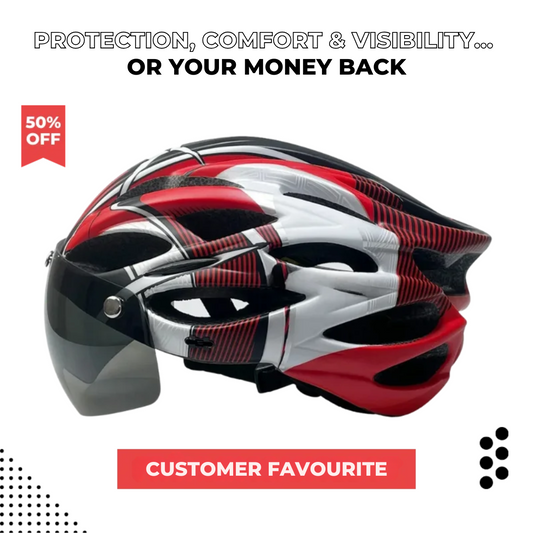
Bike Helmet With Visor: Is It Worth It? Buying Guide
A bike helmet with a visor protects your eyes from sun, wind, rain and insects without needing separate glasses. Magnetic or clip-on visors flip up or come off in seconds, and many visor helmets add a rear LED light for visibility. Here is when a visor helmet makes sense, what to check before buying, and how it compares with a regular helmet plus sunglasses.
Types of helmet visors
- Peak (sun peak): a short brim over the forehead, common on mountain bike helmets. It shades the eyes but does not cover them.
- Full eye shield (face shield): a tinted or clear lens that covers the eyes, like built-in glasses. Usually magnetic or clipped so it can be removed.
- Flip-up visor: a shield on a hinge that you lift when stopped or when it gets dark.
Benefits of a visor helmet
- Eye protection without glasses: ideal if you wear prescription glasses (most shields fit over them) or keep forgetting your sunglasses.
- Wind and tears: at 25 km/h and above, wind dries the eyes and makes them water. A shield stops it.
- Rain and grit: commuters get spray from cars and other bikes; a shield keeps it out of the eyes.
- Insects: one bug in the eye at speed is enough to cause a crash.
- Sun glare: a tinted shield helps when riding into a low sun in the morning or evening.
What to check before you buy
Safety certification
Any helmet you buy must meet the standard required where you ride (for example AS/NZS 2063 in Australia, CPSC in the United States, CSA or CPSC-equivalent standards in Canada, EN 1078 in Europe). Check the label inside the helmet and the product page. Our guide to bike helmet safety ratings explains the main standards.
Visor attachment
Magnetic shields are the easiest to remove and refit with one hand. Make sure the visor stays put over bumps and that you can store it on the helmet when you do not need it.
Tint and clarity
A dark tint is great in full sun but too dark at dusk and in tunnels. If you ride early or late, take the shield off or choose a lighter tint.
Ventilation
Count the vents and check the internal channels. A visor reduces airflow over the face slightly, so the helmet itself should breathe well.
Integrated rear light
A built-in LED on the back of the helmet sits higher than a seatpost light, which makes you easier to spot in traffic. Check whether it is USB rechargeable and how many modes it has.
Fit
Measure your head circumference just above the eyebrows and choose the matching size. Use the rear dial to snug it up: the helmet should not move when you shake your head, and the straps should form a V just under each ear.
Visor helmet vs helmet plus sunglasses
| Helmet with visor | Helmet + sunglasses | |
|---|---|---|
| Eye coverage | Wide, no gaps at the top | Depends on the frame |
| With prescription glasses | Fits over most glasses | Needs prescription sunglasses |
| Forgetting them | Always on the helmet | Easy to leave at home |
| Look | Commuter, urban | Sporty |
| Cost | One purchase | Two purchases |
The CycloGuard™ helmet with visor and LED
Our CycloGuard™ helmet combines a detachable tinted visor, a built-in rear LED light and a ventilated shell, in white, black, grey, red and graphic designs. It is made for commuters, e-bike riders and weekend riders who want eye protection and visibility in one helmet. Free shipping and a 30-day money-back guarantee. See the visor helmets.
Lost or scratched your shield? A replacement visor is available separately.
FAQ
Are bike helmets with visors safe?
Yes, as long as the helmet itself is certified for your country. The visor is an accessory; the protection comes from the shell and liner.
Can I wear glasses under a helmet visor?
Most full shields leave enough room for regular glasses. Try it before a long ride.
When should I replace my helmet?
After any crash or significant impact, and in general every few years as materials age. Read when to replace a bike helmet.